Butterfly Transect
Butterflies are well placed to act as indicators of the state of the environment as they have rapid lifecycles and are sensitive to environmental conditions. The UK Butterfly Monitoring Scheme (UKBMS) was launched in 1976 with a mission to assess the status and trends of UK butterfly populations for conservation, research and quality of life. The UKBMS has transect sites located throughout the UK with data collected each week from April to September.
Prestwood Nature has taken part in the UK Butterfly Monitoring Scheme organized by Butterfly Conservation since 2006. The transect route is walked each week, weather permitting, from 1 April through to the end of September. This year, 13 volunteers walked the transect and, between them, covered all 26 weeks of the transect period. No problems were reported except for lush growth blocking the footpath in section 8 which required an emergency work party to clear the way.
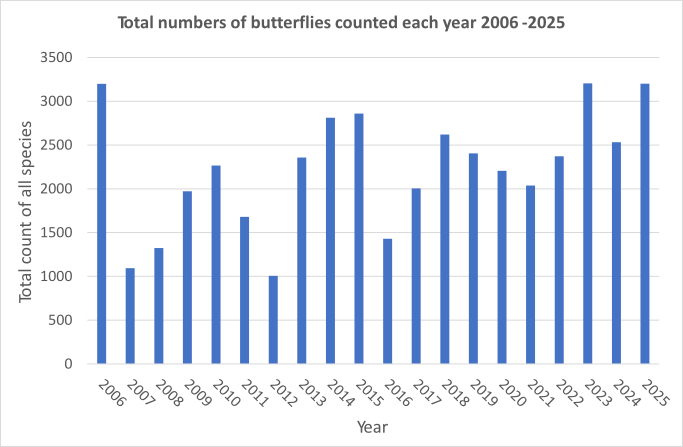
In total, 3200 butterflies were recorded on the transect in 2025 across 26 species. This is a marked improvement over the 2532 butterflies seen in the previous year and is one of the highest numbers recorded since the beginning of the transect. The table shows the top five butterfly species recorded on the butterfly transect this year compared to the average of the previous ten years’ results.
Species | 2025 | Average from 2014-2024 |
|---|---|---|
Meadow Brown | 1446 | 1040 |
Marbled White | 304 | 265 |
Gatekeeper | 283 | 162 |
Large White | 208 | 90 |
Common Blue | 205 | 86 |
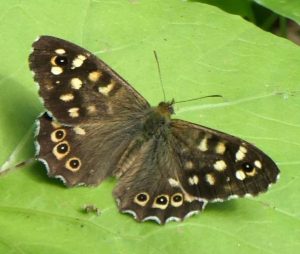
Once again the ‘Browns’ made a significant contribution to those numbers, the Meadow Browns in particular proving to be remarkably resilient. The Large White has had a particularly good year and is the fourth most common butterfly seen on the transect this year. This echoes the findings of the Big Butterfly Count where the Large White had its best ever count. It was also extremely pleasing to see a resurgence by the Common Blue this year with 205 butterflies seen compared to 27 last year with a particularly strong second brood. The Speckled Wood (see photo) has also had a good year with numbers recorded being the highest seen since the beginning of the transect (170 compared to an average of 80 in the last ten years). This butterfly was never seen in high numbers in any single week but was present throughout the transect period. It is a particularly robust butterfly and will fly in overcast conditions, found primarily in woodland settings or anywhere with shaded areas and dappled sunlight.
However, 2025 has once again not been a good year for the Small Tortoiseshell with none reported at all on the transect throughout the season. According to Butterfly Conservation’s Big Butterfly Count results, it has declined nationally by 60% since 2011. Its key larval food plant is the Common Nettle so we can help this butterfly by leaving patches of nettles and planting nectar-rich flowers in our gardens.
All results from the Prestwood Nature transect can be found in the Annual Reports below.
The butterflies we find
(Click or tap on any picture to view the gallery)
Annual Reports
Detailed reports for each year from 2008 can be downloaded here


